

I'm a supplier of urban fire trucks, and today I wanna talk about something super important: how do these Water Tank Fire Trucks maintain water pressure during operation? It's a question that's crucial for anyone involved in firefighting, whether you're a firefighter on the front lines or someone looking to purchase a fire truck.
First off, let's understand why maintaining water pressure is such a big deal. When firefighters are battling a blaze, they need a consistent and strong stream of water to douse the flames effectively. If the water pressure drops, it can mean the difference between containing the fire quickly and having it spread out of control.
One of the key components in maintaining water pressure is the water pump. Most urban fire trucks are equipped with powerful centrifugal pumps. These pumps work by spinning an impeller at high speeds. The impeller throws water outwards from the center, creating a low - pressure area at the center that sucks in more water. This continuous cycle of sucking in water and pushing it out at high pressure is what keeps the water flowing steadily through the hoses.
For instance, in our Dongfeng Water Tank Fire Truck, the water pump is designed to handle large volumes of water and maintain a high pressure. It's built tough to withstand the rigors of firefighting operations.
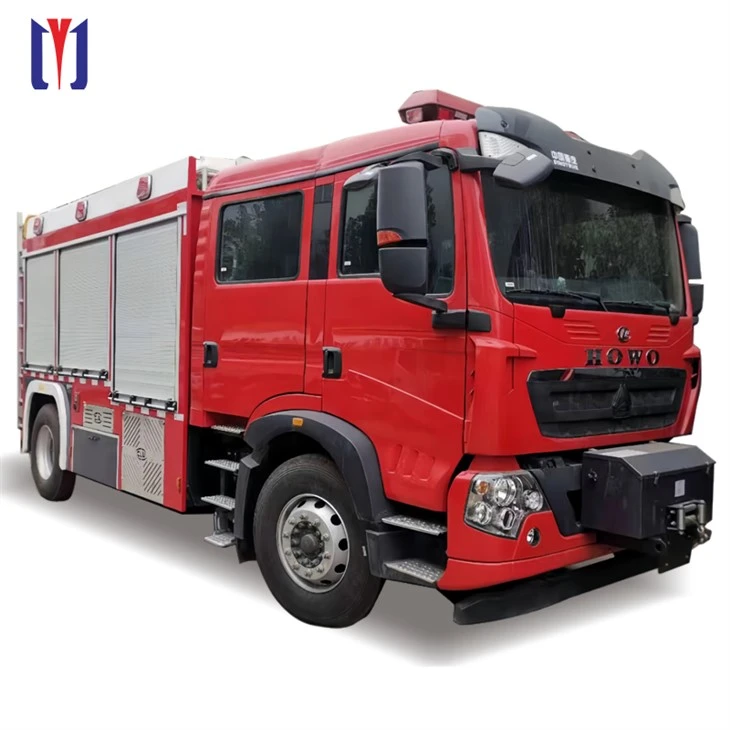

Another important factor is the size of the water tank. A bigger water tank means that there's more water available to be pumped out. This is essential because if the water runs out too quickly, the pressure will drop. Our Fire Truck models come with different sized water tanks, depending on the specific needs of the customer. A larger tank can provide a longer continuous flow of water, which helps in maintaining pressure.
The hoses used on fire trucks also play a significant role in pressure maintenance. High - quality hoses are essential. They need to be strong enough to withstand the high pressure of the water flowing through them. Also, the diameter of the hose matters. A wider hose can carry more water without a significant drop in pressure. On the other hand, a narrow hose can cause friction, which reduces the water pressure. We make sure to equip our fire trucks, like the Sinotruk Howo 11T Dry Powder - Foam Combined Fire Truck, with top - notch hoses that are built to last and maintain optimal pressure.
Valves are another piece of the puzzle. Fire trucks have a series of valves that control the flow of water. These valves can be adjusted to increase or decrease the pressure as needed. For example, if the firefighters need a more powerful stream of water to reach a higher floor of a building, they can adjust the valves to increase the pressure. The valve system in our Foton Rowor 6T Foam Fire Truck allows for precise control of the water pressure, giving firefighters the flexibility they need in different situations.
In addition to these mechanical components, proper maintenance of the fire truck is crucial for maintaining water pressure. Regular inspections of the water pump, hoses, valves, and other parts ensure that everything is in good working condition. For example, the impeller in the water pump can wear out over time, which can affect its ability to maintain pressure. So, timely replacement of worn - out parts is necessary. We provide maintenance guides and support for all our fire trucks, including the Sinotruk Howo Single - Axle Emergency Rescue Fire Truck, to ensure that they're always in top - shape.
External factors can also impact water pressure. For example, if the fire truck is located far away from a water source, it may be more challenging to maintain high pressure. In such cases, auxiliary pumps or relays may be used. These additional pumps boost the pressure of the water as it travels through the hoses. Sometimes, multiple fire trucks can be connected in a relay system to ensure a continuous supply of high - pressure water.
We also need to consider the altitude. As the fire truck operates at higher altitudes, the air pressure changes, which can affect the performance of the water pump. Special adjustments may need to be made to the pump to compensate for these changes. Our engineering team is well - aware of these factors and designs our fire trucks to perform well in various environmental conditions.
Now, if you're in the market for an urban fire truck, you gotta make sure you're getting one that can maintain proper water pressure. With our fire trucks, you can be confident that you're getting top - of - the - line equipment. We've spent years perfecting the design and functionality of our trucks to meet the needs of modern firefighting operations.
Whether you're a small - town fire department or a large urban agency, we've got a fire truck that'll suit your requirements. Our sales team is always ready to assist you in choosing the right model, answering any questions you might have, and guiding you through the purchasing process.
So, if you're interested in learning more about our urban fire trucks or getting a quote, don't hesitate to reach out. We're committed to providing the best fire - fighting solutions and ensuring that your department has the tools it needs to protect lives and property. Let's work together to make our communities safer!