

Humidity is a critical environmental factor that can significantly influence the performance of various electrical equipment, including medium-voltage power supply vehicles. As a provider of high-quality medium-voltage power supply vehicles, I have witnessed firsthand the implications of humidity on these sophisticated systems. In this blog, I will delve into the complexities of how humidity affects the performance of medium-voltage power supply vehicles and why it is essential for users to understand these impacts.
1. Understanding Humidity and Its Measurement
Humidity refers to the amount of water vapor present in the air. There are two common ways to measure humidity: absolute humidity and relative humidity. Absolute humidity is the actual amount of water vapor in a given volume of air, usually measured in grams per cubic meter. Relative humidity (RH), on the other hand, is the ratio of the current amount of water vapor in the air to the maximum amount the air could hold at that temperature, expressed as a percentage.
For medium-voltage power supply vehicles, relative humidity is the more relevant metric because it gives an indication of how close the air is to saturation. High relative humidity means that the air is holding a large amount of water vapor relative to its capacity, which can have several consequences for the power supply vehicle's components.
2. Impact of Humidity on Electrical Insulation
One of the most critical components of a medium-voltage power supply vehicle is its electrical insulation system. Electrical insulation is designed to prevent the flow of electric current where it is not desired, ensuring the safe and efficient operation of the vehicle's electrical circuits.
High humidity can degrade the performance of electrical insulation in several ways. First, water vapor can condense on the surface of insulation materials, creating a conductive path for electrical current. This phenomenon, known as surface tracking, can lead to short circuits and electrical failures. Over time, repeated surface tracking can cause permanent damage to the insulation, reducing its ability to withstand high voltages.
Second, moisture can penetrate into the insulation material itself, causing it to swell and lose its mechanical strength. This can lead to cracks and other forms of physical damage, exposing the electrical conductors to the environment and increasing the risk of electrical arcing. Arcing is a dangerous phenomenon that can generate intense heat and cause fires or explosions.
For example, in a medium-voltage power supply vehicle operating in a high-humidity environment, the insulation on the cables and busbars may degrade faster than normal, leading to frequent electrical failures and downtime. This not only affects the reliability of the power supply but also increases the maintenance costs associated with the vehicle.
3. Impact of Humidity on Electronic Components
In addition to electrical insulation, high humidity can also have a significant impact on the electronic components of a medium-voltage power supply vehicle. Electronic components, such as printed circuit boards (PCBs), sensors, and control modules, are sensitive to moisture and can malfunction or fail when exposed to high levels of humidity.
Moisture can cause corrosion of the metal contacts on PCBs, leading to poor electrical connections and intermittent failures. It can also cause the growth of mold and mildew on the surface of the components, which can interfere with their operation and reduce their lifespan.
Furthermore, high humidity can affect the accuracy of sensors and other measurement devices. For example, humidity can cause the expansion or contraction of the sensing elements in a pressure sensor, leading to inaccurate readings. This can have serious implications for the control and monitoring of the power supply vehicle, as incorrect sensor data can lead to improper operation and increased risk of equipment damage.
4. Impact of Humidity on Battery Performance
Most medium-voltage power supply vehicles are equipped with batteries to provide backup power and support the vehicle's electrical systems. Humidity can have a significant impact on the performance and lifespan of these batteries.
High humidity can cause the corrosion of the battery terminals and connectors, leading to increased resistance and reduced efficiency. This can result in a decrease in the battery's capacity and a shorter runtime. In addition, moisture can penetrate into the battery cells, causing chemical reactions that can damage the internal components and reduce the battery's overall performance.
On the other hand, low humidity can also be problematic for batteries. In a dry environment, the electrolyte inside the battery can evaporate, leading to a decrease in the battery's capacity and an increase in the risk of overheating. Therefore, it is important to maintain an optimal humidity level for the batteries in a medium-voltage power supply vehicle to ensure their long-term performance and reliability.
5. Mitigating the Impact of Humidity
To minimize the impact of humidity on the performance of medium-voltage power supply vehicles, several mitigation strategies can be employed.
5.1. Enclosure Design
The design of the vehicle's enclosure can play a crucial role in protecting the electrical and electronic components from humidity. Enclosures should be sealed to prevent the ingress of moisture and should be equipped with ventilation systems to remove any accumulated water vapor. In addition, the enclosure can be insulated to reduce the temperature difference between the inside and outside, which can help prevent condensation.
5.2. Humidity Control Systems
Humidity control systems, such as dehumidifiers and air conditioners, can be installed in the vehicle to maintain a stable humidity level. Dehumidifiers work by removing moisture from the air, while air conditioners cool the air and reduce its relative humidity. These systems can be particularly effective in environments with high humidity levels.
5.3. Moisture-Resistant Components
When selecting components for a medium-voltage power supply vehicle, it is important to choose those that are designed to resist moisture. For example, electrical insulation materials can be treated with moisture-resistant coatings, and electronic components can be encapsulated in a protective resin to prevent moisture from entering.
6. Our Medium-Voltage Power Supply Vehicles and Humidity Resistance
At our company, we understand the importance of humidity resistance in medium-voltage power supply vehicles. That's why we have designed our vehicles to withstand a wide range of environmental conditions, including high humidity.
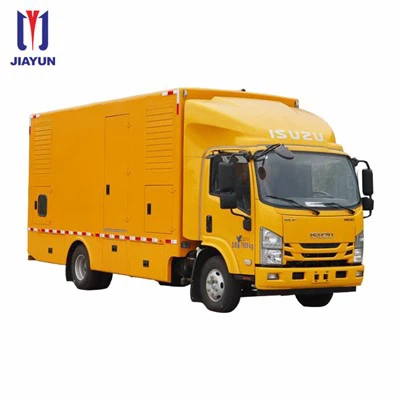
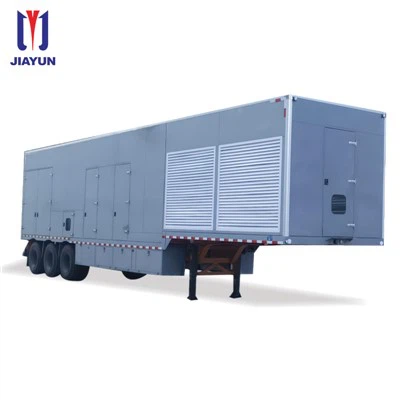
Our Three - Axle Semi-Trailer Medium-Voltage Power Supply Vehicle features a robust enclosure with advanced sealing technology to prevent moisture ingress. It is also equipped with a state-of-the-art humidity control system that ensures a stable and optimal humidity level inside the vehicle.


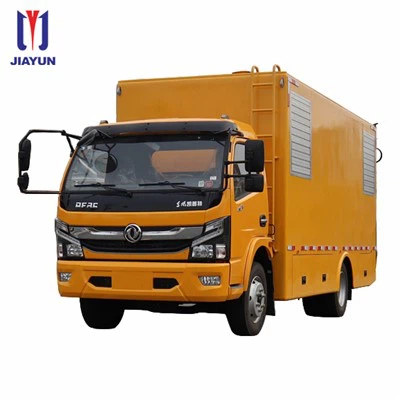
The Dongfeng Tianlong 4x8 Medium-Voltage Power Supply Vehicle incorporates moisture-resistant components throughout its electrical and electronic systems. These components are designed to resist corrosion and damage from humidity, ensuring reliable performance even in harsh environments.
Our Jiangling Medium-Voltage Power Supply Vehicle is engineered with a ventilation system that effectively removes moisture from the enclosure, reducing the risk of condensation and electrical failures.
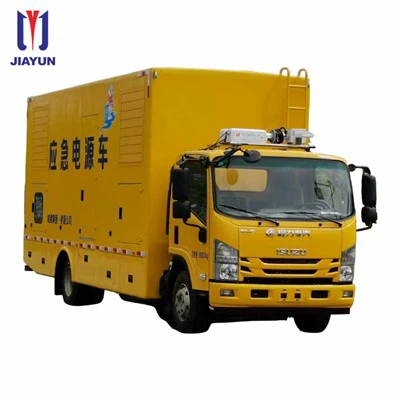
And the Mobile Power Supply Truck is built to meet the highest standards of humidity resistance, providing a reliable source of power in any weather condition.
7. Contact for Purchase and Negotiation
If you are in the market for a high-quality medium-voltage power supply vehicle that can withstand the challenges of humidity, we invite you to contact us for a detailed discussion. Our team of experts is ready to assist you in selecting the right vehicle for your specific requirements and to provide you with comprehensive support throughout the purchasing process.