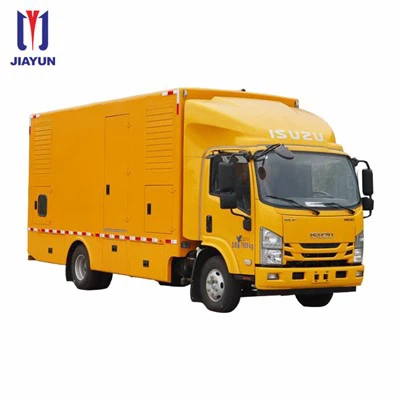


As a supplier of medium-voltage power supply vehicles, I am often asked about the cooling methods employed in these essential pieces of equipment. Medium-voltage power supply vehicles are crucial in providing emergency power during various situations, such as natural disasters, power outages, and industrial maintenance. The cooling system of these vehicles plays a vital role in ensuring their reliable and efficient operation. In this blog post, I will delve into the different cooling methods used in medium-voltage power supply vehicles.
Importance of Cooling in Medium-Voltage Power Supply Vehicles
Before we explore the cooling methods, it is important to understand why cooling is so critical in medium-voltage power supply vehicles. These vehicles house a variety of electrical components, such as generators, transformers, and switchgear, which generate heat during operation. If this heat is not effectively dissipated, it can lead to a range of problems, including reduced component lifespan, decreased efficiency, and even system failures.
Overheating can cause insulation materials to degrade, leading to short circuits and potential electrical hazards. In addition, high temperatures can affect the performance of electronic components, causing them to malfunction or produce inaccurate readings. Therefore, maintaining an optimal operating temperature is essential for the safe and reliable operation of medium-voltage power supply vehicles.
Common Cooling Methods
Air Cooling
Air cooling is one of the most common cooling methods used in medium-voltage power supply vehicles. This system uses fans to circulate air over the hot components, transferring heat away from them and into the surrounding environment. Air cooling is relatively simple and cost-effective, making it a popular choice for many applications.
In an air-cooled system, the fans are typically mounted on the outside of the vehicle or within the equipment enclosure. They draw in fresh air from the outside and direct it over the heat-generating components, such as the generator and transformer. The hot air is then expelled through vents or exhaust ports.
One of the advantages of air cooling is its simplicity. It does not require any additional fluids or complex plumbing, which reduces the risk of leaks and maintenance requirements. However, air cooling has its limitations. It is less effective in high-temperature environments or when the heat load is very high. In addition, air cooling can be noisy, which may be a concern in some applications.
Liquid Cooling
Liquid cooling is another popular cooling method used in medium-voltage power supply vehicles. This system uses a liquid coolant, such as water or a water-glycol mixture, to absorb heat from the components and transfer it to a radiator or heat exchanger. The coolant is circulated through the system by a pump, and the heat is dissipated into the surrounding air.
Liquid cooling is more efficient than air cooling, especially in high-temperature environments or when the heat load is significant. It can also provide more precise temperature control, which is important for sensitive electronic components. In addition, liquid cooling is generally quieter than air cooling, making it a better choice for applications where noise is a concern.


There are several types of liquid cooling systems, including direct liquid cooling and indirect liquid cooling. In direct liquid cooling, the coolant is in direct contact with the heat-generating components, such as the generator or transformer. This allows for more efficient heat transfer but requires careful design and maintenance to prevent leaks and corrosion.
In indirect liquid cooling, the coolant is circulated through a heat exchanger, which transfers the heat from the components to the coolant. The coolant is then pumped to a radiator or heat exchanger, where the heat is dissipated into the surrounding air. Indirect liquid cooling is less prone to leaks and corrosion but may be less efficient than direct liquid cooling.
Phase Change Cooling
Phase change cooling is a more advanced cooling method that uses the latent heat of vaporization to remove heat from the components. In this system, a refrigerant is used to absorb heat from the components and change from a liquid to a vapor. The vapor is then condensed back into a liquid by a condenser, and the heat is dissipated into the surrounding air.
Phase change cooling is extremely efficient and can provide a high level of cooling capacity in a small space. It is also very quiet and can operate over a wide range of temperatures. However, phase change cooling systems are more complex and expensive than air or liquid cooling systems, which may limit their use in some applications.
Application of Cooling Methods in Different Medium-Voltage Power Supply Vehicles
The choice of cooling method depends on several factors, including the size and power rating of the vehicle, the operating environment, and the specific requirements of the application. Here are some examples of how different cooling methods are used in various medium-voltage power supply vehicles:
Three-Axle Semi-Trailer Medium-Voltage Power Supply Vehicle
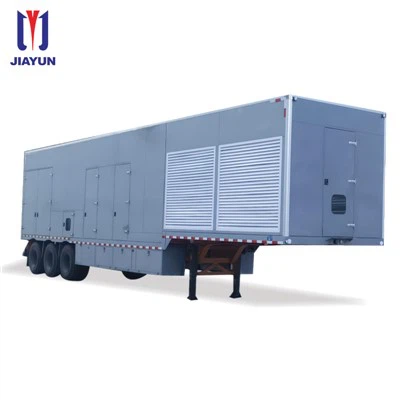
The Three-Axle Semi-Trailer Medium-Voltage Power Supply Vehicle is a large and powerful vehicle that is often used for industrial applications and emergency power supply. Due to its high power rating and the large amount of heat generated, this vehicle typically uses a liquid cooling system. The liquid cooling system can effectively dissipate the heat from the generator, transformer, and other components, ensuring reliable operation even in high-temperature environments.
Jiangling Medium-Voltage Power Supply Vehicle
The Jiangling Medium-Voltage Power Supply Vehicle is a more compact and versatile vehicle that is suitable for a variety of applications, including commercial buildings, small industries, and outdoor events. This vehicle may use either air cooling or liquid cooling, depending on the specific requirements of the application. Air cooling is a cost-effective option for applications where the heat load is relatively low, while liquid cooling may be preferred for applications where precise temperature control and high cooling capacity are required.
Dongfeng Tianlong 4x8 Medium-Voltage Power Supply Vehicle
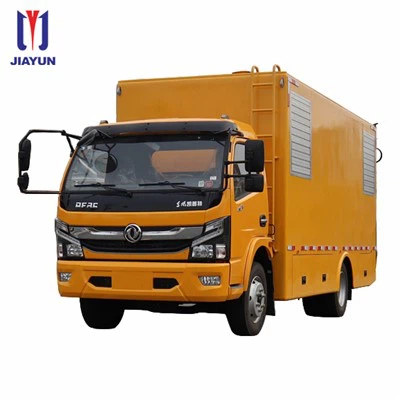
The Dongfeng Tianlong 4x8 Medium-Voltage Power Supply Vehicle is a powerful and rugged vehicle that is designed for heavy-duty applications. This vehicle typically uses a liquid cooling system to ensure reliable operation in harsh environments. The liquid cooling system can effectively dissipate the heat from the generator and other components, even in high-temperature and dusty conditions.
Mobile Power Supply Truck
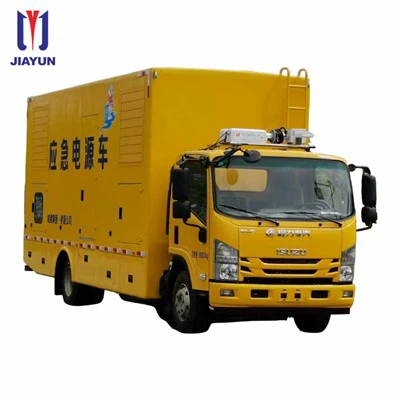
The Mobile Power Supply Truck is a versatile and mobile power source that can be used in a variety of applications, including construction sites, outdoor events, and emergency situations. This vehicle may use either air cooling or liquid cooling, depending on the size and power rating of the generator. Air cooling is a simple and cost-effective option for smaller generators, while liquid cooling may be required for larger generators to ensure efficient operation.
Conclusion
The cooling method of a medium-voltage power supply vehicle is a critical factor in ensuring its reliable and efficient operation. Air cooling, liquid cooling, and phase change cooling are the most common cooling methods used in these vehicles, each with its own advantages and limitations. The choice of cooling method depends on several factors, including the size and power rating of the vehicle, the operating environment, and the specific requirements of the application.
As a supplier of medium-voltage power supply vehicles, we offer a range of cooling solutions to meet the diverse needs of our customers. Whether you need a simple air-cooled system for a small application or a complex liquid-cooled system for a large industrial project, we can provide the right solution for you.
If you are interested in learning more about our medium-voltage power supply vehicles and their cooling methods, please feel free to contact us for a consultation. Our team of experts will be happy to answer your questions and help you select the best power supply vehicle for your specific needs.
References
- Electrical Equipment Cooling Handbook.
- Power System Thermal Analysis and Design.
- Cooling Technologies for Electronic Devices.