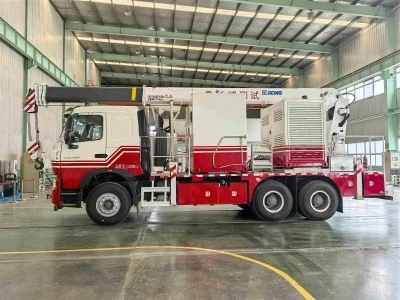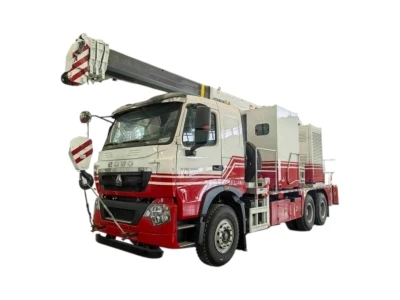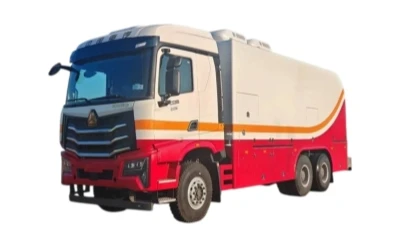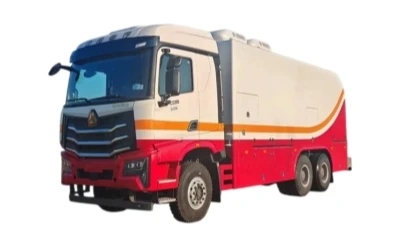

In wireline operations, cable handling is an important part of everyday wellsite work. The cable must be deployed into the well and retrieved after the operation, while remaining properly arranged on the winch drum.
Although cable spooling may seem like a routine mechanical process, an unsuitable drum arrangement can create difficulties during deployment, retrieval, and equipment maintenance.
For oilfield service companies, understanding cable spooling helps when selecting a Logging Skid for different cable specifications and well depths.
What Happens During Cable Spooling?
Cable spooling is the process of winding cable onto a drum and releasing it during operation.
As the winch rotates, the cable moves across the drum and forms successive layers. Ideally, the cable should be distributed in an organized manner to maintain suitable storage conditions.
The winding process is influenced by several factors, including cable diameter, drum dimensions, cable tension, and the alignment between the cable and drum.
If the cable is distributed unevenly, it may accumulate in certain areas or overlap irregularly. This can make subsequent cable deployment more difficult and increase the risk of abrasion or localized damage.
For this reason, cable management should be considered an important part of Logging Skid operation rather than simply a storage task.
How Does Cable Diameter Influence Drum Capacity?
Cable diameter directly affects how much cable can fit on a drum.
A thicker cable occupies more space in each winding layer than a thinner cable. As a result, two cables with the same length may require different drum capacities.
The drum's usable dimensions and winding arrangement also affect the final storage capacity.
For example, a single-drum configuration may accommodate approximately 5,000–7,000 m of cable with diameters ranging from 8.0 to 11.8 mm. A dual-drum arrangement can provide separate storage for 5,000 m of 5.6 mm cable and 5,000 m of 11.8 mm cable.
These configurations illustrate why cable length and diameter should always be evaluated together when selecting a Logging Skid.
Why Is Proper Cable Arrangement Important?
Uneven winding can affect cable handling throughout an operation.
When cable layers are not properly distributed, the cable may cross over previous layers or develop concentrated contact areas. Repeated winding under unsuitable conditions can contribute to cable wear.
Several operating practices can help improve cable management:
Maintain suitable cable alignment
The cable should enter and leave the drum along an appropriate path. Incorrect alignment can contribute to uneven winding.
Follow suitable winding procedures
Operators should follow the winch manufacturer's instructions for cable tension, winding speed, and drum operation.
Inspect cable condition
Regular inspections help identify visible damage, deformation, corrosion, or other conditions that may affect continued use.
Avoid unnecessary cable handling
Proper planning of cable length and drum capacity helps reduce repeated cable changes and unnecessary handling between jobs.
Single-Drum or Dual-Drum Configurations?
The choice of drum arrangement depends on the types of services performed by the oilfield company.
A single-drum Logging Skid may be suitable for operations that mainly use one cable specification. It provides a straightforward arrangement for storing and deploying the selected cable.
A dual-drum configuration can be useful when different cable specifications or operating requirements need to be accommodated.
For example, a service company handling both armored cable and steel wire operations may benefit from discussing separate drum arrangements during equipment selection.
However, the number of drums alone does not determine operational suitability. Buyers should also consider the required cable length, diameter, hoisting capacity, and available installation space.
What Should Buyers Check Before Selecting a Cable Drum?
Before purchasing a Logging Skid, procurement teams should prepare the following information:
- Cable type and diameter.
- Required cable length and typical well depth.
- Expected lifting load.
- Single-drum or dual-drum preference.
- Winch and transmission requirements.
- Transportation and installation limitations.
These details help the supplier determine whether the proposed drum arrangement matches the intended application.
Jiayun Automobile offers Logging Skid configurations with different cable drum capacities and winch arrangements for oilfield wireline and slickline operations.
Conclusion
Cable spooling affects how a Logging Skid stores, deploys, and retrieves cable during wellsite operations. Cable diameter, drum capacity, winding arrangement, and operating practices all influence cable management.
Selecting a suitable drum configuration helps oilfield service companies prepare equipment for different well depths and cable requirements while supporting more organized field operations.
For more information about Logging Skid configurations, contact:
Email: wanghaile@jiayuntruck.com