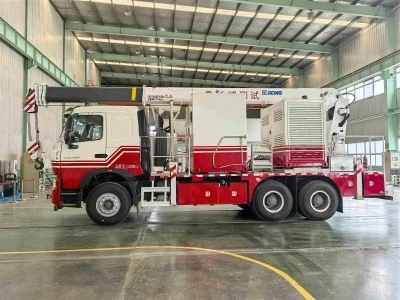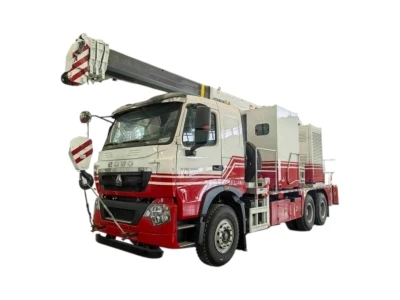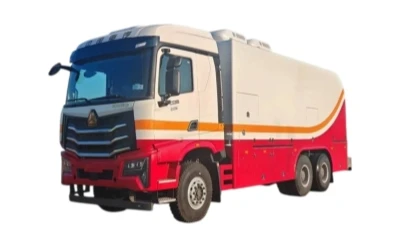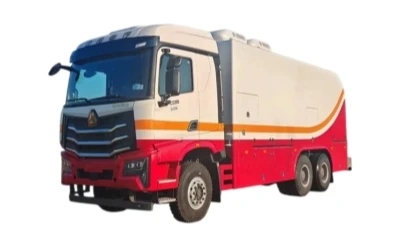

Deep-well wireline operations require more than a reliable winch and a heavy-duty vehicle. As well depth increases, wireline tension, cable capacity, lifting speed, equipment stability, and operating conditions become increasingly important. For oilfield service companies and well intervention contractors, selecting the right Oilfield Logging Truck can directly affect operational efficiency, equipment reliability, and the ability to reach remote well sites.
This guide explains the key factors to consider when selecting a Wireline Logging Truck for deep-well applications.
1. Match the Truck to the Required Well Depth
Well depth should be one of the first considerations when selecting a logging truck. The wireline drum must have sufficient cable capacity for the intended operating depth while maintaining appropriate tension and handling characteristics.
For example, a truck designed for conventional shallow or medium-depth operations may not provide enough cable storage for deeper wells. Buyers should therefore specify the expected maximum well depth, wireline diameter, and required cable length before selecting the drum configuration.
A single-drum system may be suitable for standard wireline or slickline operations, while a dual-drum configuration can provide greater flexibility when different wireline sizes or operational tasks need to be supported.
2. Evaluate Pull Force and Lifting Speed
Deep-well operations place greater demands on the winch system. The required pull force depends on factors such as cable weight, toolstring weight, well deviation, friction, and downhole operating conditions.
Lifting speed is another important parameter. A suitable Oilfield Logging Truck should provide controlled wireline movement across different stages of an operation rather than simply maximizing line speed.
For procurement teams, it is useful to compare rated pull force, lifting-speed range, drum capacity, and hydraulic drive performance as a complete system rather than evaluating the winch alone.
3. Check the Hydraulic System and Power Stability
A stable hydraulic system is essential for deep-well wireline work because inconsistent power delivery can affect winch control and operational continuity.
When comparing different wireline logging trucks, buyers should examine the hydraulic drive type, major hydraulic components, maintenance requirements, and availability of replacement parts in the target market.
For example, the Jiayun Oilfield Logging Truck uses a full hydraulic drive system with Rexroth or Danfoss hydraulic components. Its configuration supports lifting speeds from 30 to 8,000 m/h and rated pull forces of 50 kN / 25 kN, depending on the drum configuration.
4. Consider the Operating Environment
Deep wells are often located in remote oilfield areas where road conditions and weather can be challenging. A logging truck may need to travel across gravel roads, muddy terrain, or desert environments before reaching the wellsite.
The vehicle chassis should therefore provide sufficient load capacity, mobility, and durability for the intended operating environment. The operator cabin is also worth considering, particularly for projects in high-temperature, dusty, or harsh-weather regions.
An integrated cabin can keep monitoring and control equipment protected while providing operators with a dedicated working environment during extended wireline operations.
5. Select a Configuration That Fits Your Service Portfolio
Purchasing decisions should reflect the actual services performed by the oilfield contractor. A logging truck may be used for production logging, well testing, slickline operations, tool fishing, valve installation and retrieval, casing inspection, or other well intervention activities.
If your service portfolio covers multiple applications, a configurable Oilfield Logging Truck can reduce the need to operate several specialized vehicles. Drum configuration, wireline size, cabin layout, and related equipment can be considered according to project requirements.
6. Consider Long-Term Service and Spare Parts
For B2B buyers, the purchase price is only one part of the total cost of ownership. Spare parts availability, technical support, maintenance requirements, and after-sales service can have a significant impact on long-term operating costs.
Before placing an order, confirm the supplier's ability to provide technical documentation, spare parts, configuration support, and assistance after delivery. These factors become especially important when the truck will operate in remote oilfields or across multiple countries.
Conclusion
Selecting a Logging Truck for Deep-Well Wireline Operations requires a system-level evaluation of well depth, cable capacity, pull force, lifting speed, hydraulic performance, chassis capability, operating environment, and long-term service support.
Hubei Jiayun Automobile Co., Ltd. provides Oilfield Logging Trucks with SINOTRUK heavy-duty chassis, single- or dual-drum configurations, full hydraulic drive, and customizable equipment arrangements for different oilfield applications.
For project-specific requirements such as target well depth, wireline specification, drum configuration, or operating country, contact wanghaile@jiayuntruck.com for further technical information and configuration recommendations.